What changed
To make room for your baby, the muscles down the front of your belly stretched and the connective tissue between them thinned. For many people, a gap remains for a while after birth. You might notice it as a soft dip or a ridge along your middle when you lift your head from the floor.
This is common, and it isn’t a sign your body has done anything wrong. It’s a sign of what it has just done. A doctor, midwife or pelvic floor physical therapist can check it for you and tell you what it means for your own recovery.
Breath before effort
Your deep core works best when it works with your breath. Before you add any challenge, practice breathing in to widen your ribs, then breathing out with a gentle lift and hug through your middle. That soft exhale is the foundation for every move that follows.
Exhale on the effort. It’s the simplest cue, and it changes how almost every move feels.
Watch for doming
As you move, glance down at your belly. If you see it peak or bulge along the middle, that’s your cue to make the movement smaller, slow down or add more breath. That’s normal, and useful to know.
- Lift your head less, or keep it down.
- Shorten the lever: bend your knees, bring your arms closer.
- Exhale before you move, not halfway through.
Moves that tend to suit this stage
Once you’re cleared, these are good places to begin. Keep each one small and smooth.
- Heel slides with a soft exhale as the heel slides away.
- Modified dead bug, tapping one heel to the floor at a time.
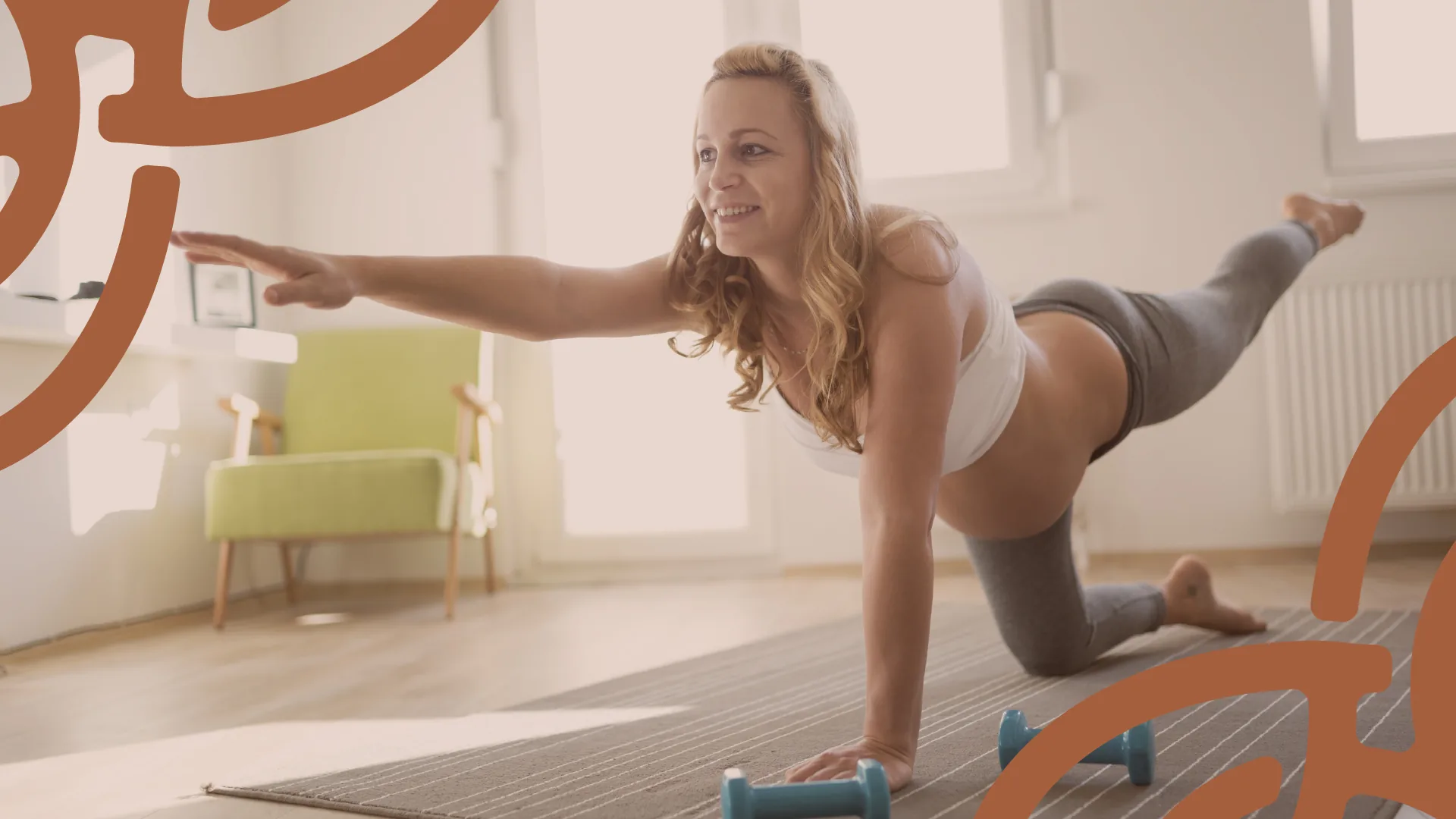
- Bird dog on hands and knees, reaching one arm and the opposite leg long.
- Side-lying clams to wake up the muscles around your hips.
Crunches, sit-ups and heavy twisting can wait until your provider or physical therapist says you’re ready.
Everyday habits that help
Your core works all day, not just during workouts. A few small habits take pressure off while you rebuild:
- Roll to your side to get out of bed instead of sitting straight up.
- Breathe out as you lift your baby, the car seat or the laundry basket.
- Hold your baby close to your body rather than out in front of you.
- Change positions during long feeds so one side doesn’t do all the work.
None of these need extra time. They turn things you already do into practice.
How progress tends to look
Core recovery is rarely a straight line. For many moms it looks like this: first, the breath feels easier to find. Then everyday movements feel steadier. Later, harder versions of exercises feel controlled instead of shaky. Each stage can take weeks, and that is completely normal. Keep the moves that feel good, revisit the ones that don’t, and let your body set the pace.
When to get more help
If you notice a gap that isn’t changing, pain, a feeling of pressure, or leaking, ask your provider about a referral to a pelvic floor physical therapist. They can assess you in person and tailor exercises in a way no general program can.
This article is general information, not medical advice. Please get clearance from your doctor or midwife before you start any exercise after giving birth. Stop and seek care if you feel pain, bleeding, dizziness or shortness of breath.
See the Recover phase→