Many nursing moms want to feel at home in their bodies again, and that can include losing the weight gained during pregnancy. That’s a fair goal. The tricky part is that breastfeeding asks a lot of your body, and the fast approaches you see online can work against both you and your milk supply.
What to do instead.
Why slow works better
Making milk takes energy. When food intake drops sharply, some people notice their energy crash, their mood dip or their supply change. Every body is different, which is why we never suggest cutting calories hard while you’re breastfeeding. If you have questions about how much to eat, your provider or a lactation consultant is the right person to ask.
What helps most is steady, nourishing eating: enough food, at regular times, built from whole foods you enjoy.
Eat enough, at regular times. Start there.
Five small habits
1. Build meals around protein and fiber
Eggs, beans, lentils, Greek yogurt, fish, chicken and tofu help meals feel satisfying. Pair them with vegetables, fruit and whole grains, and you’ve got a plate that keeps you going between feeds.
2. Keep one-handed snacks within reach
Hunger during night feeds is real. A small box with nuts, cheese, fruit or oat bites means you’re not reaching for whatever is closest at 3am.
3. Drink to thirst, and keep water nearby
Many moms feel thirsty while nursing. Keep a bottle wherever you usually feed, and sip whenever you sit down.
4. Make the easy choice the default
Batch-cook a soup or chili on a good day. Wash and cut fruit when you unpack groceries. It pays off on the hardest afternoons.
5. Let sleep and stress count
Short nights make everything harder, including hunger cues. Rest when you can, accept help when it’s offered, and go easy on yourself on the hard days.
What about workouts?
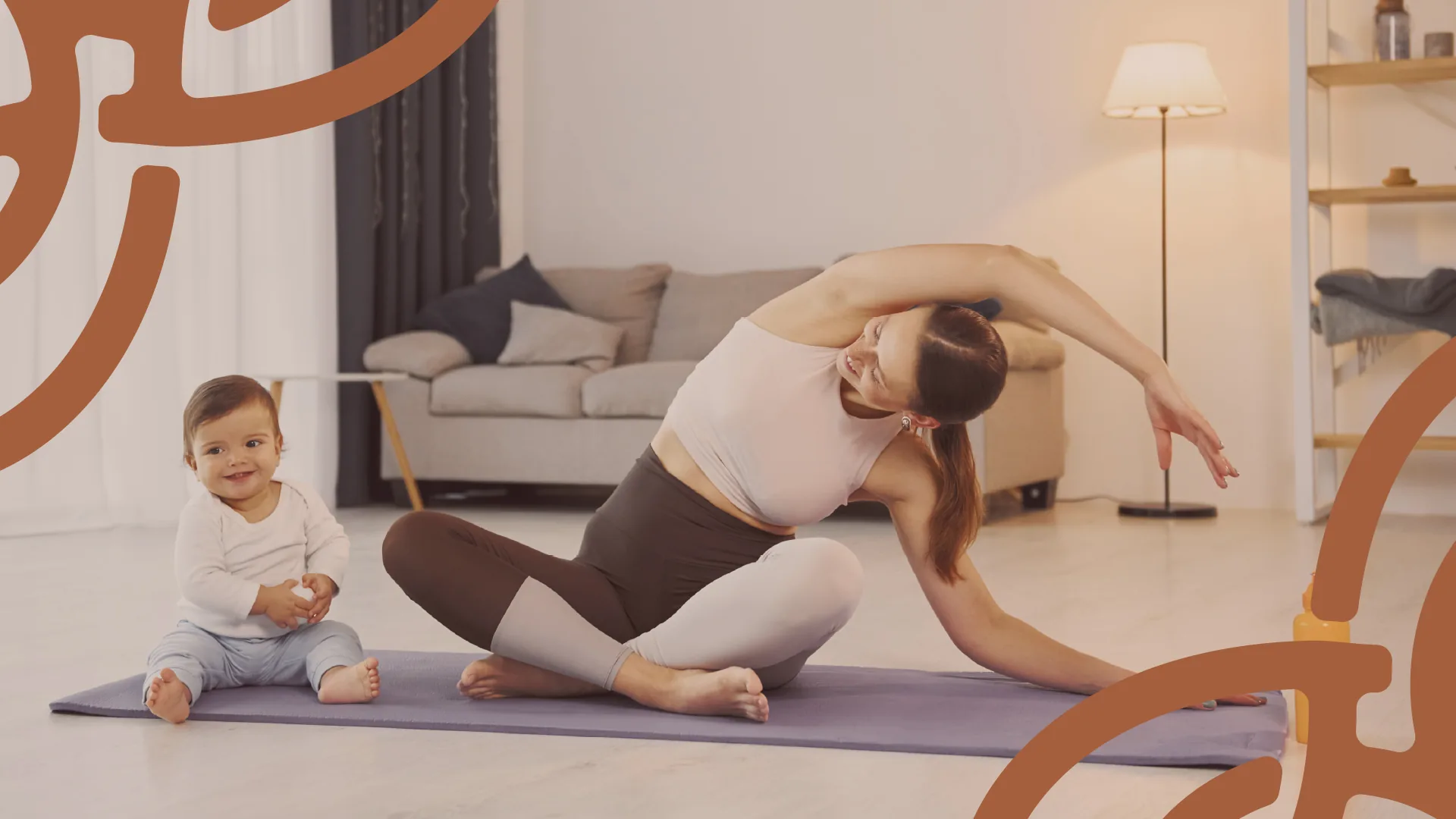
Movement can help you feel stronger and more energized, and it pairs well with steady eating. Once you’re cleared, short sessions are plenty. Many moms find it more comfortable to feed or pump before a workout, wear a supportive bra and keep water close.
Strength work matters as much as anything that gets your heart rate up. Stronger legs, back and core make every lift of a car seat or laundry basket a little easier.
A note on timelines
Bodies change at their own pace after birth, and there’s no set amount or schedule you should expect. Comparing yourself with someone else’s timeline rarely helps. Notice the other wins along the way: more energy, carrying the car seat with ease, sleeping better on the nights the baby lets you.
A nourishing day
There’s no perfect menu, and you don’t need one. Here’s one realistic shape for a day when you’re feeding often and sleeping in pieces:
- Morning: overnight oats with yogurt, berries and a spoon of nut butter, plus a big glass of water.
- Mid-morning: a hard-boiled egg and a piece of fruit, eaten during a feed.
- Lunch: a bowl of leftover soup or chili with a slice of whole-grain toast.
- Afternoon: hummus with crackers and cut vegetables, or cheese and an apple.
- Dinner: salmon or beans with roasted vegetables and rice.
- Night feeds: a handful of nuts, an oat bite or a glass of milk.
No meal is skipped and no food is off-limits. The goal is to feel steady through the day rather than hungry and running on empty.
Signs you need a bit more food
Your body is good at sending signals, even when you’re too busy to notice them. Feeling shaky, light-headed or irritable between meals, struggling to concentrate, or feeling hungry again soon after eating can all be signs that you need more food or more regular meals. Take those signals seriously, and bring them up with your provider if they keep happening.
When to ask for help
Talk to your provider or a lactation consultant if you notice a change in supply, feel dizzy or unusually tired, or have questions about nutrition for your own situation. They can give advice that fits you in a way no article can.
Lasting progress comes from eating enough and giving it time.
This article is general information, not medical advice. Please get clearance from your doctor or midwife before you start any exercise after giving birth. Stop and seek care if you feel pain, bleeding, dizziness or shortness of breath.
See the Recover phase→